Executive Summary
Comprehensive Review and Gap Analysis of Ghana’s Transition to Electric Two- and Three-Wheelers
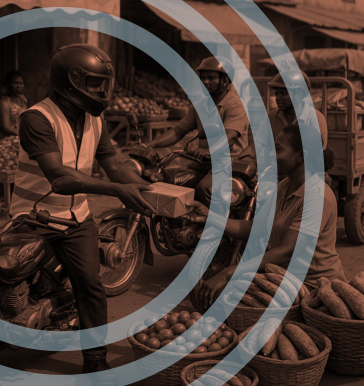
Two- and three-wheelers are central to Ghana’s transport ecosystem, underpinning livelihoods and mobility across urban and peri-urban areas. Yet as global momentum accelerates toward electric mobility, Ghana’s policy and regulatory landscape remains insufficiently equipped to steer this transition for its smallest — and most prevalent — motorised vehicles.
This report presents the first comprehensive assessment of Ghana’s readiness to transition its two- and three-wheeler fleet to electric power. Drawing on extensive policy and literature review, political economy analysis, stakeholder consultations, and comparative case studies from India, China, Kenya, and Rwanda, the study maps the current transportation landscape, evaluates existing regulatory frameworks, and identifies critical gaps that constrain progress. A gender equality and social inclusion (GESI) analysis is integrated throughout, examining how women, low-income populations, and other marginalised groups risk exclusion from an otherwise promising transition.
The findings reveal significant misalignment between Ghana’s stated climate ambitions and its operational policy architecture. The National Electric Vehicle Policy (2023) lacks specific provisions for electric two- and three-wheelers. High import duties remain the dominant market barrier. Institutional fragmentation limits coordinated action across transport, energy, and industrial policy. Meanwhile, the legal ambiguity surrounding commercial motorcycle taxis creates a regulatory vacuum that stalls investment and innovation in the electric segment.
Comparative analysis demonstrates that Ghana’s transition demands innovation opportunities rather than direct policy transfers. Fiscal-first approaches — exemplified by Kenya’s elimination of import duties and Rwanda’s zero-tax regime — offer the most transferable models for import-dependent markets. Solar-integrated charging, ECOWAS-level manufacturing strategies, and microfinance-based inclusion mechanisms emerge as particularly promising pathways suited to the Ghanaian context.
The report concludes with targeted, sequenced recommendations spanning short-term fiscal interventions, medium-term regulatory reforms, and longer-term industrial development strategies. These findings establish the evidence base for subsequent project deliverables on economic viability, local manufacturing potential, electrification constraints, and policy pathways — collectively informing a gender-responsive roadmap for integrating electric two- and three-wheelers into Ghana’s sustainable transport future.
Read Full Report Here: D1 – Comprehensive Review and Gap Analysis Report (FINAL REPORT)